Beirut, 1922
Chapter One
The Office
It is impossible today to imagine a Lebanese landscape that doesn’t include countless brokerage offices whose purpose is bringing domestic workers from Global South countries into Lebanon. These offices have formal licenses from the state to take hold of the entire process, from recruitment to travel arrangements to accommodations for the women when they first arrive. They are even asked to mediate conflicts between workers and their employers or to intervene when the law has to get involved for any reason. They exist, in short, to provide a supply for which there is great demand. They are the marketplace where the (entirely unequal) transaction between employer and worker takes place, and they also help shape the market for workers at large.
But how did we come to this point? How did this market grow into what it is today, and how did the class profile of people hiring domestic workers expand so much? The history here is relayed through the first-person stories of two brokers: Salma and Zein. Together, their stories cover a timespan of a century, from the early 1920s—before Lebanon was an independent state and long before the existence of any official brokerage offices—until today. Through their eyes, we are provided a look not only at the country’s tumultuous history and rapid growth but also at the personal stakes involved for all of those who maintain the marketplace.
Part One
The Era of “Sitt Salma”
Research
Jinane Dagher
Maher Abi Samra
Written by
Samar Delki
Collage
Lena Merhej
Salma worked as a house servant for 15 years, beginning at the age of nine. In 1958, she opened her own domestic worker’s employment agency on Badaro Street in Beirut. Her story was recounted to us by one of her nephews. But the narrative below also weaves in elements from various accounts of other former agents for domestic workers, as well as from stories of Lebanese women who were once domestic workers themselves during that same time period. As such, Salma’s story is also that of the transformation of the domestic workers’ market, from something more disorganized, dependent on informal social ties (which here include some religious organizations), to a more “official” market, with all relationships mediated through brokerage agencies which were legalized at the end of the 1950s.
I was born in 1924 in Karantina in Beirut. My parents named me Salma after a maternal aunt who had passed away when she was only five years old. I was the second of six children. My father worked as a carrier in the Beirut port. He was born and raised in a small village in South Lebanon. His father, my grandfather, was a tobacco farmer. When my father was 16 years old, he moved to Beirut, searching for any job that could earn him a living. Through a distant relative, he found work at the Beirut port. At the age of 18, he married his maternal cousin, who was 17 at that time. The newlywed couple moved into a small shack in Karantina, close to the port. All my siblings and I were born and raised there.

When I was nine years old, in 1933, my father decided to send me to an orphanage. He had sent my older brother to go work with our grandfather in the tobacco fields and now decided that it was time to find a solution for his eldest daughter as well. At the time, it was common practice for poor families to send their children, especially if they were girls, to orphanages, even if the parents were still alive. These were always purely economic decisions. The orphanage they took me to was the Azariyeh convent in downtown Beirut, and the convent’s nuns ran it.
My stay at Azariyeh was a short one. After one month, the nuns decided to send me away again: this time to work as a maid in one of the rich people’s houses in Beirut. Again, this was the fate of many; a lot of orphaned, or not-orphaned, girls who stayed with the nuns were sent to work as maids, especially if they were between the ages of 7 and 12. Due to their well-connected position in Beiruti society, it was easy for the nuns to find families who were in need of a maid. It was a double trade agreement: my parents had given me away so as to no longer be accountable for keeping me alive, and the orphanage had given me away so as to have one less mouth to feed. This did not mean that the nuns were no longer responsible for me; they gave me away like an object on lease while keeping a close watch on what I was doing and where I was working.
Over the next eight years, I would work in five different households in various areas in Beirut. It was always the nuns who took me from one household to another. I vividly remember the first house in which I worked. It was one of the villas in upper Ashrafiyeh with a garden. It had huge rooms, stained-glass windows, and high ceilings. The family quickly became fond of me because I was already tall and strong for my age, which was useful for the work I had to do: cleaning the house, carrying stuff, helping out in the kitchen, washing clothes, and tidying up. They called me “the tall one” and sometimes “tall Salma.”
I was one of five other maids in that household. Three of them were around my age; two were about seven years older. Most of these girls were from villages in the Keserwan area in North Lebanon. All of us shared one room in the villa’s basement, together with Fawzieh, the family’s cook, a woman in her late 40s. Fawzieh had been with this family since she was seven years old. Her status was special: on the one hand, she was sometimes counted and mentioned as a “member of the family,” occasionally sitting with them for morning coffee or going on day trips with them. On the other hand, she was also far more their property than any other one of us maids. While we at least didn’t know what our future might hold, hers was clear and inevitable: she would remain at work in the kitchen of that same family until she died. And indeed, Fawzieh did die in that house, in 1967, of a heart attack. She was actually buried in the graveyard adjacent to the family’s own plot.
The other maids were either like me, sent from one of the orphanages in Lebanon or had come directly from their home villages into the houses of the grand Beiruti families. Some kind of “broker” from Beirut, usually a person originating from the village, would pass by his “home village” asking poor families if they wanted to send their daughters to work in Beirut, saying he could facilitate the deal in exchange for a relatively small amount of money. Back in Beirut, he took the girls to the houses in need of maids—again in exchange for a sum of money. And with that, the trade was concluded. I remember one of these “brokers” passing by one of the houses in which I worked from time to time to check in on Mariam and Najah, two sisters from the village of Mayrouba in Keserwan who had been sent off to work by their family. About twice a year, the broker took them back to their family’s house for a visit.
There was only one girl I remember who was in fact, an orphan, or at least she knew nothing about her father and mother. She was also not registered and therefore had no legal papers. We worked in the same house for a time before she escaped and was never heard from again. She was 15 at the time. Rumour had it that she had run away with one of the guys who delivered vegetables to our house and that she had ended up working as a prostitute and abusing drugs.
Many of the other girls I remember, however, had better fates. Some were, like me, sent from house to house before eventually marrying; others stayed in the same house for a long period of time, developing some kind of family relationships with their employer until they were also married off, yet remaining a part of the family in some way for the rest of their lives.
During my time working as a maid, I did see my biological family every now and then. Sometimes, my mother or my sister would visit on a Sunday; sometimes, I was allowed to go off with them for a couple of hours, either for a family lunch, a special event, or just some gathering. During these rare occasions, I felt strange and awkward, never really in the right place, and also constantly on the verge of leaving. I was always aware that these visits were temporary, lasting just for some hours, and that my place was somewhere else.
Over the course of all those years, I learned to be a good maid. I was physically tall and strong, and I was obedient to my superiors, cleverly fulfilling my tasks and role. I also developed a good sense of resilience and calm that helped me adapt to all the different households and circumstances I encountered during these years. I learned how to become just like the people I worked for: how to talk like them, behave like them, look at things like them, solve problems like them. I distanced myself more and more from my own family background. They still called me “tall Salma,” often continuing the sentence with “our good, strong maid.” Two of the convent’s nuns regularly visited the house where I worked, checking on us maids and helping solve any problems that arose. Because they never heard any complaints about me, they began entrusting me with the responsibility of solving small problems in the house myself—mediating any disagreements between us maids, for example, or between the family and the maids. Ensuring that the maids’ presence in the house was smooth and pleasant for everyone meant the continuation of the business for the nuns, a business that didn’t provide them with direct financial compensation but assured them donations and privileges from the rich in exchange for a supply of good maids. I fulfilled my role well, again relying on my good sense of balance: keeping a close eye on everything happening in the house yet always while attempting to remain invisible.
By the time I was 16 years old, I had already been working as a maid for seven years in five different households. I had moved from Ashrafiyeh to Ras el Naba’, then to Qoraytem, then back to Ashrafiyeh once again. When the Israeli state was formed in 1948, around 100,000 Palestinians fled to Lebanon, seeking refuge from the horrors of the Nakba. A Pontifical Mission was set up to help the new arrivals. Because of my good relations with the nuns, they offered me a job at the Mission, working on packaging and distributing aid to Palestinian refugees.
I made a good living working there, and it was also a job in line with the values and ideas I had learned from the nuns: that helping others and engaging in charity work was and should remain one of the core activities of my life. That’s when I began finding a new place for myself in Beiruti society.
I moved back to my family’s shack in Karantina and began helping to support them. My role in the family had changed completely: I was no longer the older sister to be sent to work far away, nor the visitor who came every so often for a few hours. I had become “tall Salma,” a former maid who had managed to move up the social and economic ladder.
Through my work at the Pontifical Mission, I met Abou Elias and Loutfi, two co-workers who were in their late twenties at the time. About Elias was a Palestinian from Haifa, who, prior to 1948, had been a truck driver, shuttling goods and people back and forth between North Palestine and Lebanon, and so he had good relations established in Lebanon. Immediately after he fled Haifa in 1948, he found a job working at the Pontifical Mission. Loutfi was a Syrian man who had been born in Lebanon to a Lebanese mother and a Syrian father. His paternal family originally hailed from Beit Jinn, near the southern border of Lebanon. He was originally an Alawite who had embraced Christianity.

There were countless people in dire need, not just the tens of thousands of Palestinian refugees who had arrived in Lebanon with nothing but a few belongings begging for some help. Loutfi also knew of many poor Syrian families living in Lebanon. And so Loutfi, Abou Elias, and I began working together to make arrangements for the families in need, offering to find their minor daughters work as maids in the houses of the rich. That’s how we began working as brokers, placing young girls as domestic servants with well-to-do Lebanese families. They were mainly girls from the Alawite Mountains in Syria and some from the newly-established Palestinian camps in Lebanon. We continued working for the Pontifical Mission while on the side operating our “grey market” business with the maids out of the same office. Indeed, the wide network of connections we’d built with rich people through our work at the mission was of great benefit to our work as brokers.
This was a period of modernization and development for Beirut, largely thanks to the expansion of the port, and the city suddenly saw a growing middle and upper class, all in need of household help. In 1952, Abou Elias left the Pontifical Mission and started working with UNRWA. And so Loutfi and I alone continued the business of bringing girls from poor Syrian families to work in Beirut. We were called samasira (agents), while the girls were often referred to as lafaya (i.e., belonging to; affiliated with). The girls we placed into rich families were rather young, in keeping with people’s preferences for housemaids who were on average between the ages of 7 and 12. Young girls were hardly noticed; they rarely caused problems and were easier to control—and I had learned all this from my own experience working as a maid.
In 1958, after a short period of civil war and unrest, Fuad Chehab became the new president of Lebanon. His presidency heralded the beginning of a new era in Lebanon, an era of technocracy, modernization, and bureaucratization. The Chehabi era, too, saw a new phase in my own career as a businesswoman, for with the help of a distant relative of my mother’s who had gained a rather high position at the Ministry of Labour under the new government, I managed to register as an agent for domestic workers in Lebanon officially. In order to receive my official license, I had to deposit 10,000 LBP (approximately 3,000 USD) in the bank under the name of the Ministry of Labour. It was all the money I had managed to save over the course of my time working at the Pontifical Mission and running my maid’s business with Abou Loutfi. If my broker’s office shut down, I was told, the money would be returned to me.
I rented a small office in the East Beirut neighborhood of Badaro, an upper-class residential area, and seat of many state institutions. I officially started to hire out Lebanese, Palestinian, Syrian, and Egyptian girls to work as domestic servants in the homes of Lebanese families. Over the course of the following years, my business flourished, and my network expanded. I was hiring out between five to ten thousand girls a year. My job wasn’t always easy; I had many challenges come up, sometimes with state officials, sometimes with the girls, or with the families who had hired them. I usually solved these problems myself, very often through endless negotiations and financial compensation, no matter the incident.
During the first ten years, my office was one of about 8 to 15 offices in Beirut, all of which had opened for business in the Chehabi era between 1958 and the early 1960s. The era of Chehabism had not only paved the way for the formalization of this registered business model, but, through its focus on modernization and bureaucratization, it had also created a new “expert” middle class: state officials employed in the newly expanding public sector, engineers, doctors, businessmen, and lawyers. All of them were in need of clean and functioning households, and most importantly, they could afford to hire servants to help them. Therefore, all the members of this class were potential clients for maid agencies, such as the one I ran in Badaro.
The business was going so well that in 1966 I opened two other small offices close to Badaro, run by two of my nephews. These were my golden years. I had relations and connections with people from all walks of society, including with high state officials who were all dependent on me to find them young girls to work in their houses. Through these relations, I was also able to help my relatives get into positions within the military or government or help facilitate the running of their own businesses and companies.

My job was mainly in the office, welcoming clients and negotiating their needs as well as contracting new girls and communicating with my middlemen in the different regions from which we hired the girls. I had middlemen in Jabal Mohsen in Tripoli, in Akkar, and in Sir Daniyyeh, as well as in the Alawite mountains in Syria. It was nearly always fathers who brought their daughters to me, the same way my father had given me up to the orphanage 30 years earlier. Things had changed and become more formalized since then, however: a formal contract was always concluded between me and the father, valid for three years and renewable after that, giving me the exclusive right to place the girl with any family in Lebanon that needed a maid.
Although the day-to-day business took up most of my time, it was still necessary for me to travel to Syria every now and then in order to keep an eye on my business there, to engage directly with the middlemen I had in the villages, and discover new villages for the potential recruitment of girls. I usually traveled to Homs, where I spent the night at the home of one of my “middle women,” Imm Samih, continuing from there into the Alawite mountains and then on to Aleppo. I recruited girls from Aleppo who were skilled at cooking the famous dishes of their hometown.
These trips to Syria became especially necessary in the 1970s after Hafez al Assad came to power and enforced compulsory education for young girls and boys. In order to keep my business running, my well-connected brokers in Syria and I had to find solutions to bypass these laws, and so we started smuggling girls over the al-Kabir River at the border. I also enlarged my network in order to recruit more Kurdish and Egyptian girls, managing to maintain my numbers of new recruits and keep them as high as in the previous years.
Once, during the early 1970s, I was detained in one of the villages in the Syrian Alawite Mountains, accused of illegally taking girls from the village. I quickly contacted my middlemen, who were well connected among the Syrian security apparatus, and I was out of the detention center within a couple of hours.
My business only began to fall apart after 1975, when the civil war in Lebanon broke out. People started to become touchy about questions of a religious sect and were more hostile to people with Syrian or Palestinian nationalities. Families were unlikely to employ someone of another religious sect, let alone a Syrian or Palestinian girl. Soon a new market in the maid business opened up, increasingly relying on the recruitment of girls from Asian countries, such as Sri Lanka. My business declined rather suddenly, and by 1977 I could no longer sustain my three offices. I sold off all three of them and lived another ten years in Badaro, where I had bought myself a house in 1962. I died in 1985.
Part Two
Zain and the Maids
From South Lebanon to the Southern Suburbs of Beirut
Research by
Maher Abi Samra
Written by
Maher Abi Samra
“We were poor, in every sense of the word.”
And with those words, Zain began his story, the story of his personal and professional lives, bridging past and present but leaving his listener to guess at what troubled feelings might accompany this confession. As he speaks, his tone wavers somewhere between sarcasm and pride, pain and satisfaction. The way he sees it, his ability to have moved up in the world is owed to a combination of lucky chances and his skill at seizing them, which allowed him to improve his material and social circumstances and lift himself out of the poverty in which he grew up. From the 1960s until the early ‘90s, he lived in his home village of Shaqra, a border town in South Lebanon, moving after that to the Southern suburbs of Beirut.
Scraping By
Zain was born in 1965, a son of his father’s first marriage. Married twice, Zain’s father sired 11 children in total, eight boys and three girls, all of them born in Shaqra. Zain attended the same village school like all the rest of his siblings, making it to the third grade before the first large-scale Israeli military campaign on South Lebanon began in the spring of 1978. Seeking to neutralize the Palestinian Fedayeen, the Israeli army invaded Lebanon all the way up to the Litani river to oust their headquarters, bases, and camps.
The large family earned their income from simple agriculture, planting onions, garlic, and wheat. When its season came, the children and their mother would harvest the wheat, using it to make flour for bread and bulgur for cooking. They picked pomegranates and green almonds to sell and also sold the juice they made from the pomegranates. There were so many children to feed. Their mother would have to make 13 or 14 helpings of markouk bread every morning, cooking the huge loaves atop the wood fire; the same fire above which the mother boiled the family’s dirty laundry in an enormous tin pot to remove the worst stains before scrubbing the garments by hand. And if any of her children should ever somehow get their hands on five piasters in the course of their day’s work, she’d be flooded with great joy. But it never lasted: her happiness was always as fleeting as the children’s joy in a Pepsi or RC cola bottle, whose metal tops they punctured with a nail, creating a tiny hole out of which they could suck the sweet liquid out as slowly as possible.
At the end of the 1960s, Zain’s father had joined the ranks of the Fedayeen, the armed faction of the Palestinian Fateh organization that had bases in the villages of South Lebanon. He was like so many of those around him, who found themselves caught up in a wave of fervor for Palestinian “Fedayee work,” embracing and aiding the cause in the villages of South Lebanon after the resounding defeat of the Arab armies in the June 1967 war. His father’s zeal led to Zain’s ancient and modest family home becoming a quasi-permanent headquarters for the Fedayeen, as well as their followers, supporters, and fighters in the village. When some of the family’s boys, including Zain, came of age during the first half of the 1970s, their father loaded them into his Range Rover and took them to the nearby camps of the Fedayeen for military training before sending them to Syria for more specialized military training courses.
Zain’s father also used to take seasonal road-trips, filling his jeep with a cargo of bulgur, sumac, zaatar, and other such locally-produced goods, and driving from Shaqra all the way to Kuwait, where one of his elder sons had migrated for work, following in the footsteps of his uncle.
Migrations
The young storyteller spent his boyhood days in his village in the 1960s and early 1970s following the simple routines of the harvest. But then, all at once, everything changed. The family’s entire way of life was abruptly upended in 1978, when the first wide-scale Israeli military campaign was launched on the territory of South Lebanon, including Shaqra, in the spring of that year. Zain’s father had been anticipating just such an attack, and so had already left the South for Beirut, leaving his family behind in the village. Many inhabitants in fact, fled when the campaign began, including Zain and his brothers, especially after they heard that Israeli soldiers had been asking for them by name at their village home. They stayed with some relatives in Beirut’s Southern suburbs for a time before Zain’s father drove three of his sons—one of whom was Zain—to Kuwait to find work.
After Zain’s father returned on his own to Lebanon, he rented a small shopfront in Beer al-Abed next to his sister’s house and turned it into an auto body shop. There he worked alongside two of his sons, performing oil changes and fixing damaged wheels. Meanwhile, the three sons who had migrated to Kuwait for work were living there with their uncle, who had married a Kuwaiti woman. At first, the boys attempted to pursue their schooling, but the schools in Kuwait refused to take them unless they repeated three whole years of education—years they had already completed in the village school of Shaqra. And so, they left their studies behind and looked for the sort of work that might be available to immigrants like them. Zain ended up at his uncle’s workshop fixing television sets and radios. But after a year and a half in Kuwait, the three brothers returned home to Lebanon disillusioned, hitching a ride back with their father on one of his return trips. They all set to work at their father’s auto body shop, where business was booming. This was due to the influx of used cars on the Lebanese market that had been facilitated both by the civil war, as well as the expansion of import networks via sea from the European markets after the second huge Israeli military campaign on Lebanon—an invasion that reached all the way to Beirut this time in the summer of 1982.

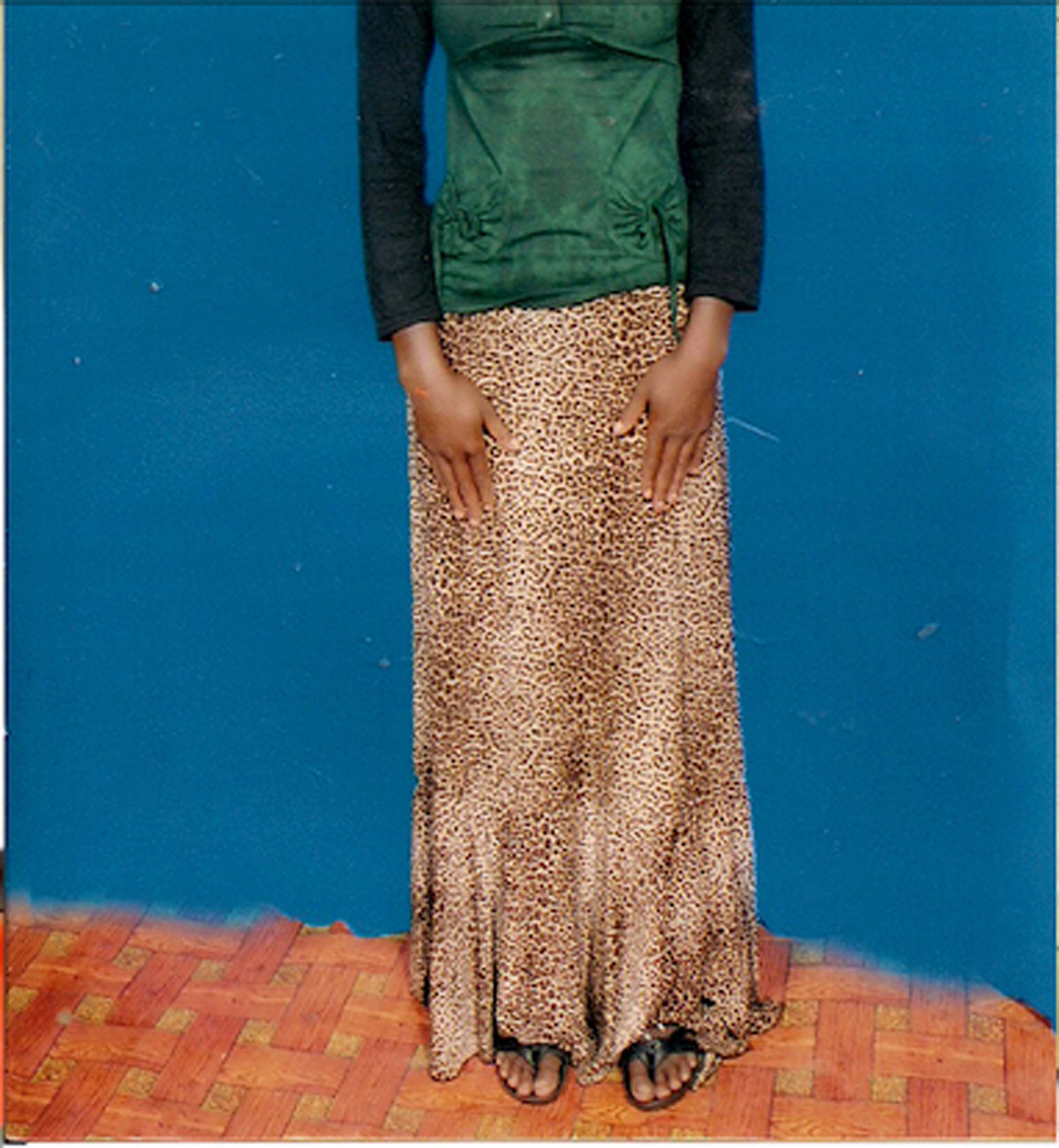
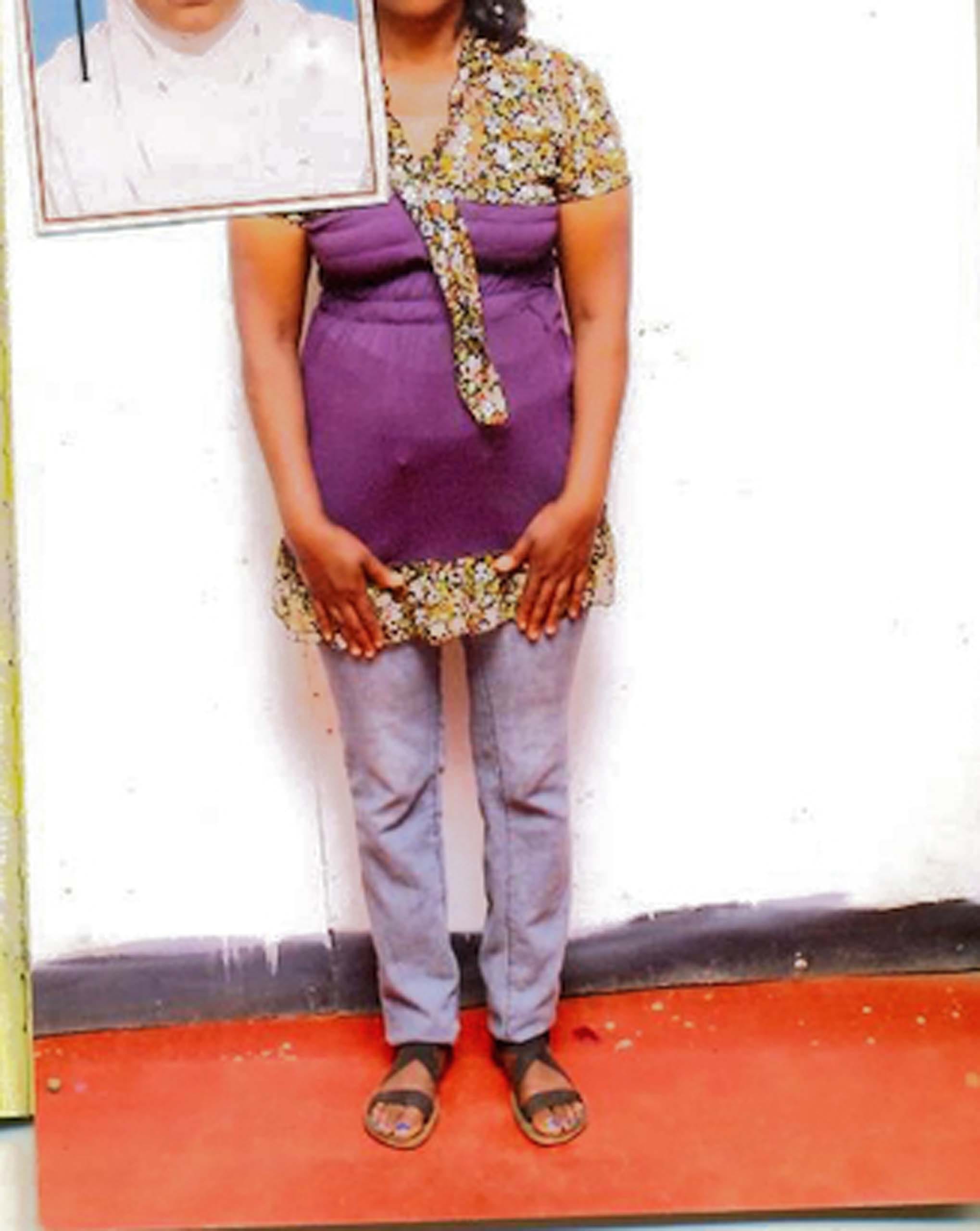
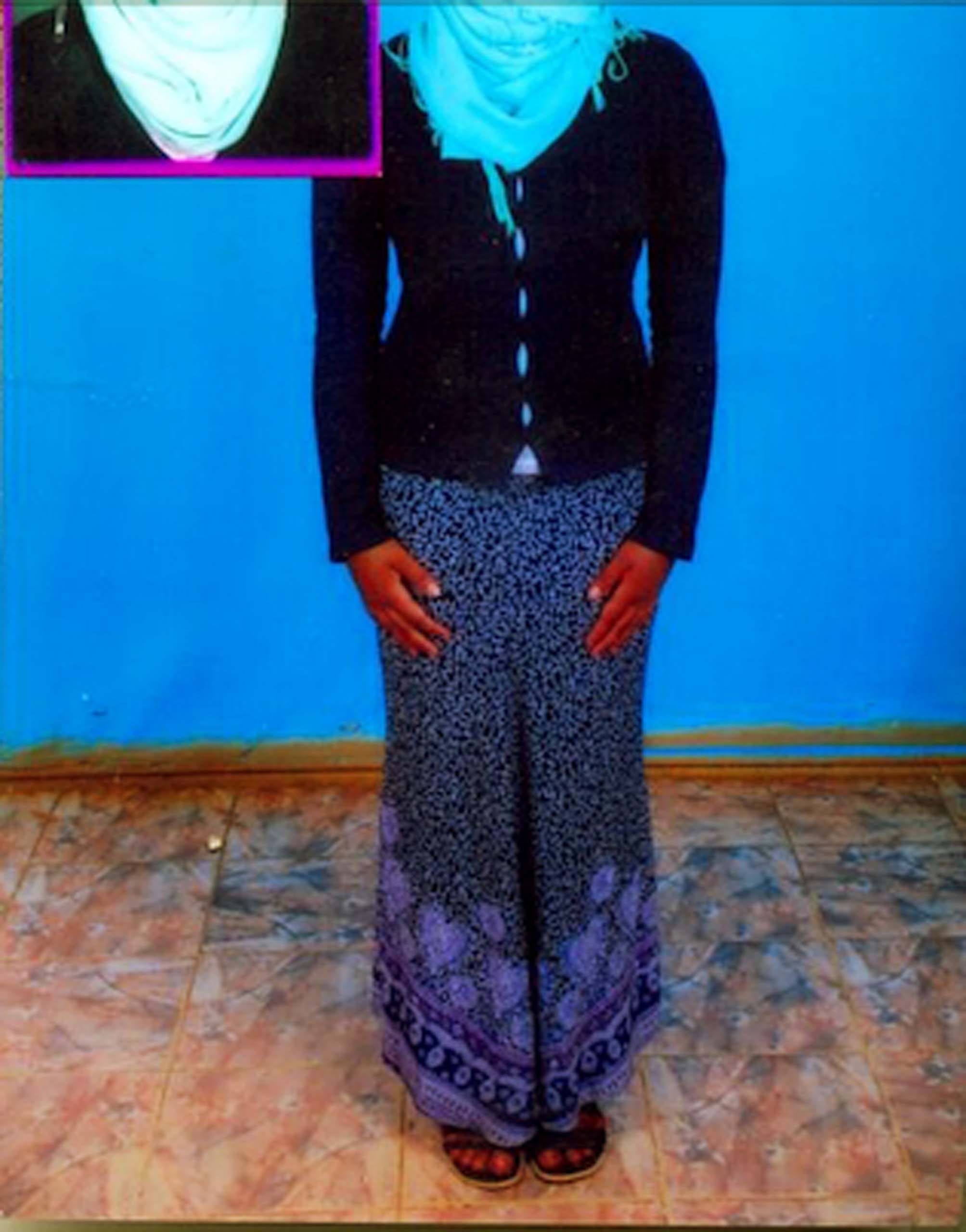
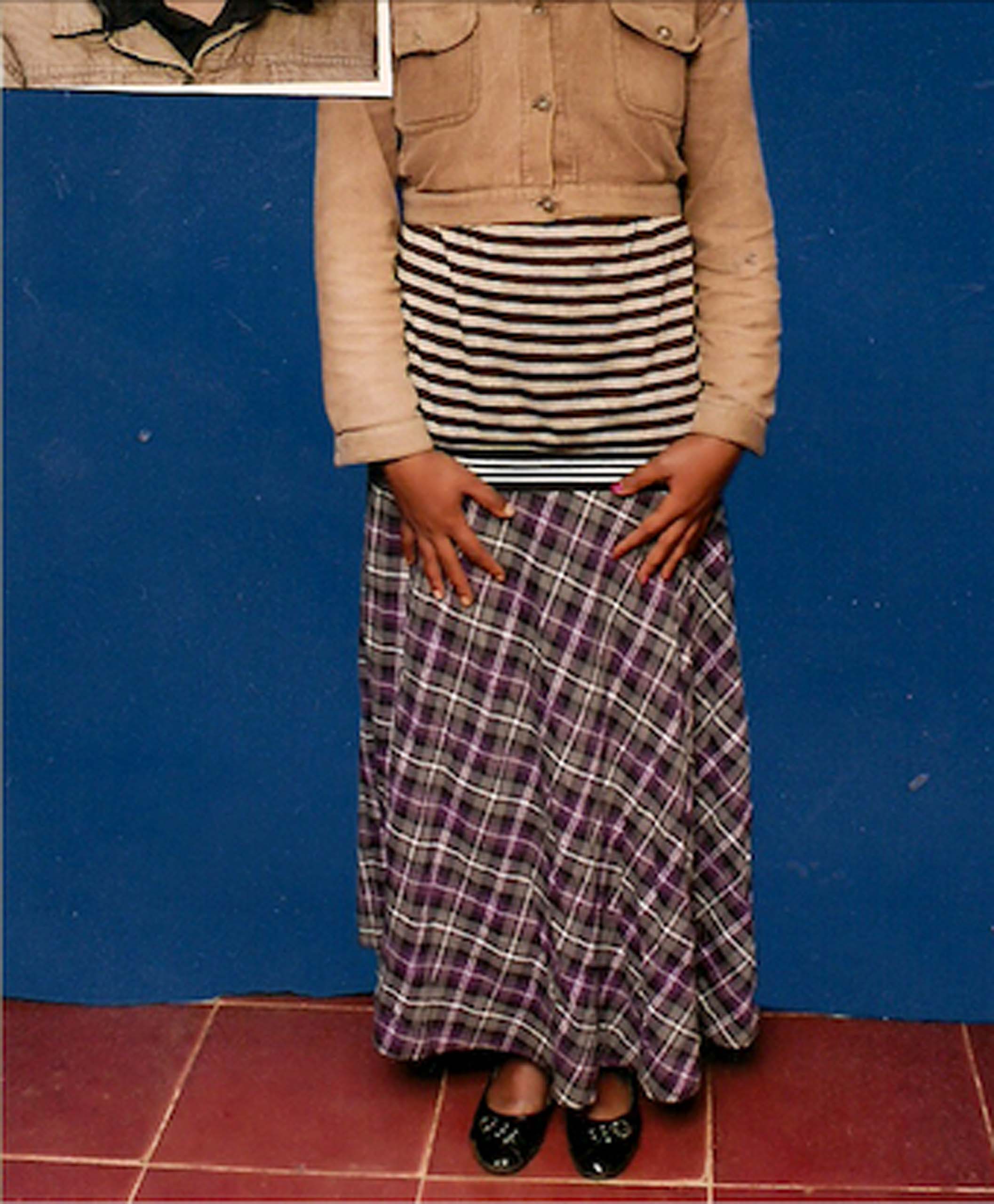
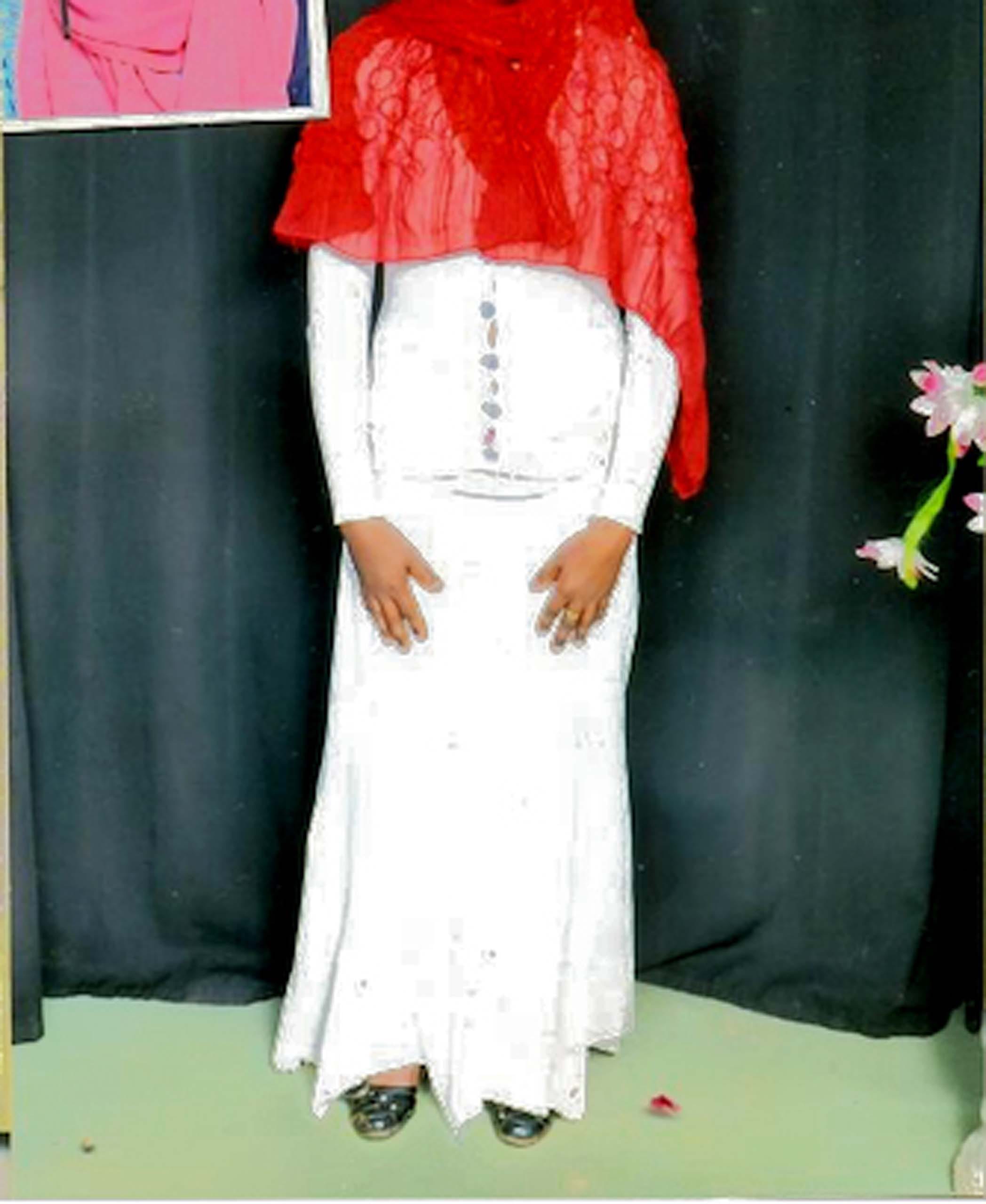
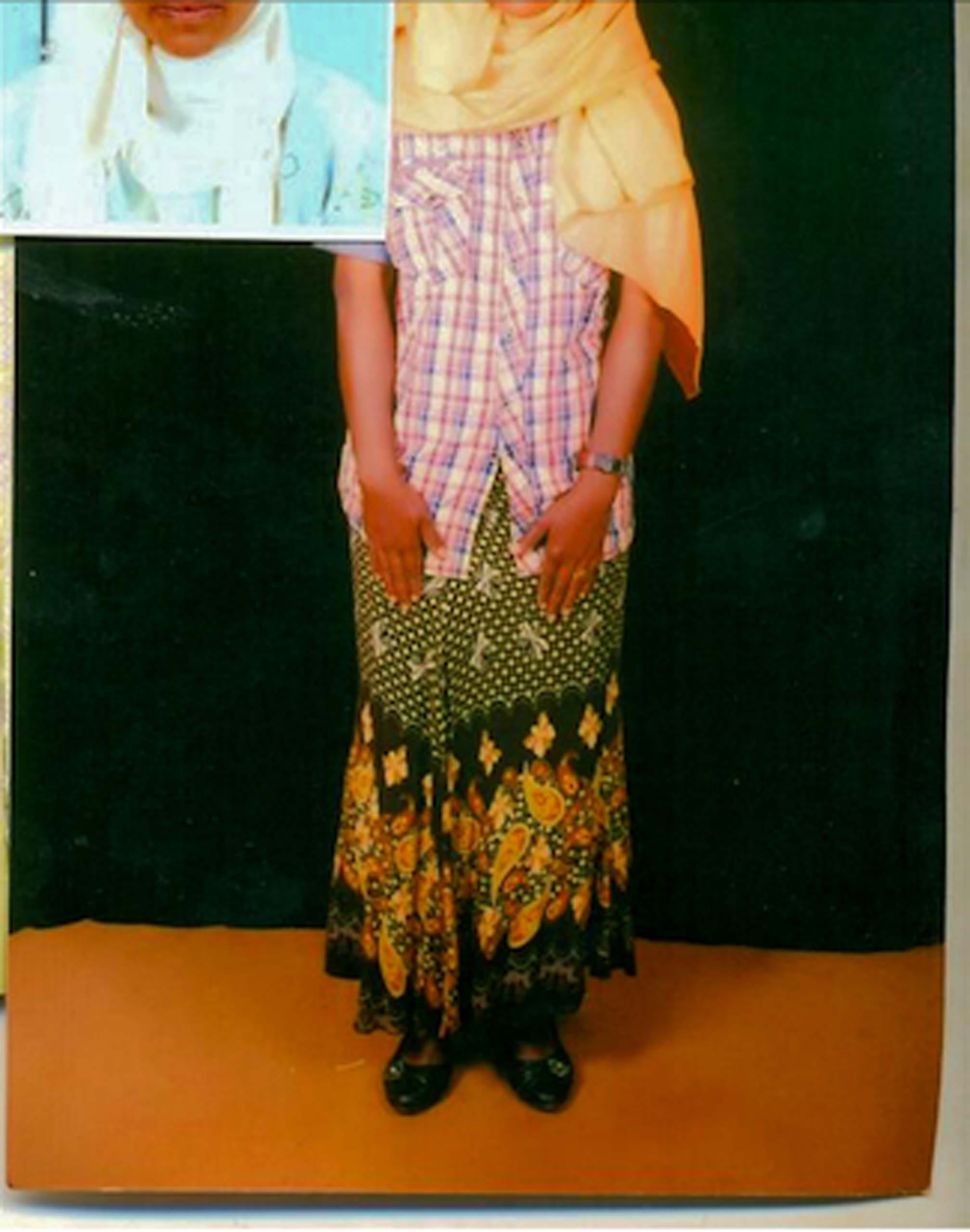
A sample of the document used by the office to describe the worker to her potential employer
Out of respect for the domestic worker’s privacy, her face, name, and passport number have been concealed
The Minister of Unknown Documents
 Zain, the narrator of this tale, probably wouldn’t have been able to tell it with such satirical levity were he not convinced of the inevitability of such clientelist complicity, how widespread it is in general and how necessary such relationships are for any professional success. As though the procedures and transactions governing that sort of cronyism were all part of some “unspoken pact” that basically administers all work and trade. It was only a matter of time before Zain and his brothers discovered the true nature of the documents they were bringing to their relative the minister to sign:
 pre-approved agreements required by the Ministry of Labor for anyone who wished to bring a foreign domestic worker in from abroad and employ them at home. Before this discovery, not a single one of the brothers—according to Zain—had ever even laid eyes on a domestic worker, either in anyone’s home or out in the streets, whether Lebanese, or Syrian, or from any other East Asian country. Maybe they hadn’t noticed the one at their relative the minister’s house. But from that point onwards,
  that is, from the mid-1990s on, they began noticing all the unfamiliar brown-skinned girls and women they encountered, sometimes passing through the streets of the neighborhood in front of their body shop. After asking around, they discovered that these women hailed from Sri Lanka, and were working as housemaids in Beirut, and that their arrival in the city must have been preceded by a signature on one of the documents they’d passed to their uncle the minister, whose approval had helped facilitate this woman’s arrival to the country so that she might be put to
 work cleaning the home of one of their auto body shop clients. The brothers, along with one of their cousins who also worked at the auto body shop, began paying close attention to this new phenomenon. They began observing the faces of all the Sri Lankan women they saw in the streets, and becoming more aware of their own intermediary role in the process. Finally, they decided to pay an official visit to their relative, the minister of Labor, in order to openly discuss that role. And so, Zain, his cousin, and both their fathers all went
  together to sit down with the minister at his home, and he explained to them all the paperwork and procedures required by the Ministry of Labor to bring Sri Lankan domestic workers into the country.Zain and his family then suggested that they open up an office in order to handle all these transactions—taking up the role of middlemen that they’d already been playing, only now in an official, and paid, capacity. They hoped furthermore that their relative could help them obtain the permit for such an office from the ministry.
  The minister welcomed the idea, telling the two fathers, of course. Saying it was important for the young people to find work and evolve it in this domain. I’m ready to help the young men of our family do just that, he said.
Big Men in the Office
Zain, his brothers, and his cousin prepared all the documents necessary to establish a commercial register for a recruitment and employment agency for foreign domestic workers. The permit was processed and signed within a day of its being issued thanks to their relative, the minister. In fact, the license became operational before the brothers, and their cousin even understood how to sort out the very first orders of their business, so they quickly took to trying to familiarize themselves with all the steps and procedures involved in bringing women over from Sri Lanka.
In the course of his research, Zain met a man who ran an employment agency for domestic workers and ended up accompanying the man on a trip to Colombo, Sri Lanka, in 1996. It was the first time he’d ever set foot in an airport, and he was, at that point, as ignorant of everything to do with travel as he was of the English language, the lingua franca necessary for him in order to communicate with the contacts he was supposed to meet in Sri Lanka. On both his first and second visits to the country, he behaved more like someone humorously playing a part without believing it was truly his to play.
He went on to rent a small office space for his new work on the ground floor of a building in the Beer al-Abed area, not too far from the auto body shop, in the same building where his aunt lived on the first floor. At first, he didn’t get a phone line for his office and would instead direct people who wanted to do business with him to call him at his aunt’s, who would step out onto the balcony and yell out for him to come upstairs and take the call. He spent long hours every day sat behind his desk, engrossed in reading the newspaper, which he bought every day without fail as he considered it one of the indispensable tools required for his new job, just like his new clothes, which no longer had grease stains on them from the auto shop. This relieved his mother of the task of having to launder all those stains from his clothes and the clothes of his two brothers, who had also abandoned that line of work. The auto body shop, however, continued to operate, run by Zain’s father and two of his other sons.
The number of extended family members granted permits by the minister of Labor to open up their own recruitment and employment agencies for foreign domestic workers multiplied, and soon there were a number of new offices springing up in Beirut and its southern suburbs. The paperwork required to recruit and employ a foreign domestic worker was relatively minimal and easy to obtain, as was the cost of the whole procedure. There was a network of Lebanese and Sri Lankan recruiters working together in Sri Lanka to obtain entry visas from the Lebanese embassy in Colombo for domestic workers seeking to come to Lebanon, while in Lebanon, the agencies would prepare all the paperwork required by the Ministry of Labor in order to secure employment for the women upon arrival in the country. In addition to the price of the one-way flight ticket to Beirut, the cost of bringing one domestic worker into the country in the mid-90s was somewhere between 400 and 500 dollars. The agency in Beirut charged their customers between 800 and 900 dollars upfront for each woman they brought in to work in their household, and households were expected to provide a salary of 80 to 100 dollars per month for their live-in maids. At the time, the Ministry of Labor did not yet require work permits for the women, nor any residency permits from the Directorate of General Security. The vast majority of the foreign domestic workers in Lebanon hailed from Sri Lanka.
Zain, his brothers, and his cousin gradually came to learn the “secrets of the trade” as they worked in their small office in the Beer al-Abed neighborhood, earning enough income to rent another, bigger office space on the second floor of a brand new building on Mouawad Street, which not only boasted a “chic” market for ready-to wear clothing boutiques but had also generally become known as one of the more upscale neighborhoods in the Southern suburbs in the years after the war. However, shortly after they opened the bigger office, Zain’s cousin decided to leave the business and traveled to Germany to work in the used car business. The brothers thus found themselves alone when suddenly, in 1997, they had to contend with the emergence of a new law that forced brokerage agencies like theirs to deposit 50 million Lebanese lira (at the time, equivalent to about 33,000 US dollars) in trust at the Central Housing Iskan bank to continue operating, or else they would have their permits revoked.
Zain and his brothers were shocked at the amount they were expected to secure in order to keep their business running—an amount they decidedly did not have. Once again, they went to pay a visit to their relative, the Minister of Labor (Uncle Abu Ziad), to ask: What are we supposed to do, uncle? One minute you’re granting us a permit, and the next, you’re issuing a law to cancel it. What are we supposed to do now? We have no idea where to get 50 million lira from. The uncle thought for a minute and then came up with his solution for the brothers. I’ve given all the other agencies a single month’s grace to come up with the money, he said, but to you I will give three.
The brothers had still not fully digested or come to terms with their new lot in life. That they were now truly free of the auto body shop, that they went to work at an office every day in clean clothes, with hands and faces free of grease stains, that they sat in a pristine office in a chair behind a desk. There were no car tires to repair, and they didn’t need to spend hours in a hole in the ground peering at the underside of a car. No, they had literally ascended to a higher position, wherefrom their second-floor office balcony, they could look down on people as they went about their days below. They took phone calls from atop their rolling office chairs behind their desks, and they regularly went to airports and flew on planes and got to discover the world and its people. They now inhabited another world entirely, meeting different people and having other kinds of conversations in a wholly new language. They were far from their old lives at the auto body shop. And the desire to remain in that new world lent the brothers both the physical and emotional energy necessary to keep their agency open and running. They decided to work twice as hard, to redouble all their efforts in order to secure the 50 million Lebanese lira necessary within the three months their relative the minister had made available to them. At the end of the three months, they had managed to earn most of the amount, enough to be able to borrow the rest from their father and uncle reasonably. They deposited the money at the housing bank and received a certificate to secure their operating permit in return.
Zain and his brothers now worked with renewed vigor, and this new level of seriousness and professionalism became apparent in the way they ran their office in Mouawad Street. In the beginning, their father would come to visit his sons at the office, parking himself in a corner for hours and watching the comings and goings of their work. He would overhear conversations with this client or that, growing irritated as he listened to their angry grievances with their maids. The housewives would often drag their maids along with them to the agency, complaining of their ignorance or bad behavior or disobedience and demanding to “exchange” them with others who were better behaved. During his hours at the office, Zain’s father sometimes also overheard the complaints of some of the domestic workers, how they spoke agitatedly and fearfully in their broken Arabic about having been subjected to physical and emotional abuse at the hands of their employers, and how they’d been deprived of food. And Zain’s father would grow angrier and angrier, though he suppressed it in the presence of the clients. Once, however, he couldn't help himself, and he exploded in the face of one of the complaining housewives. Yesterday, you were starving, he yelled, and the minute you got some food in your belly and some coins to rub together, you got up on your high horse and got yourself a maid to serve you, and now you won’t even give her food to eat?
Zain leaped to his feet to cut his father off, begging him, please, please, please, dad, don’t get involved. We’re not in the village here. We’re in an office in Beirut. But the woman huffed out of the agency, all the same, cursing the day she ever set foot in it.
The Market and its “Trends”
For the first twelve years, the work of recruiting and employing foreign domestic workers from Sri Lanka was easy and profitable, says Zain. But he had to find ways to evolve and expand his work by bringing in workers from Ethiopia, Bangladesh and the Philippines, responding to the fluctuations of the market as well as the Lebanese themselves, whose moods, wishes, and desires oscillated wildly as they competed with one another, struggling to stay ahead of the curve. The Lebanese employed women based on trends and fashion and based on their perceived social rank and what they imagined this social rank required by way of a suitable choice of a maid. For the maid’s nationality was a reflection of the social standing of her employer. While Sri Lankan women were the most available on the Lebanese domestic labor market since having begun arriving in the mid-1980s, people in certain circles and environments began favoring women from Ethiopia and the Philippines instead. Despite this, many Lebanese domestic workers hailed from either Ethiopia or the Philippines continued to refer to them as “Sri Lankans” since the nationality itself had become synonymous with domestic work. And so, when some Lebanese wish to declare that they have a domestic worker at home, they will often be heard to say: “I have a Sri Lankan.”
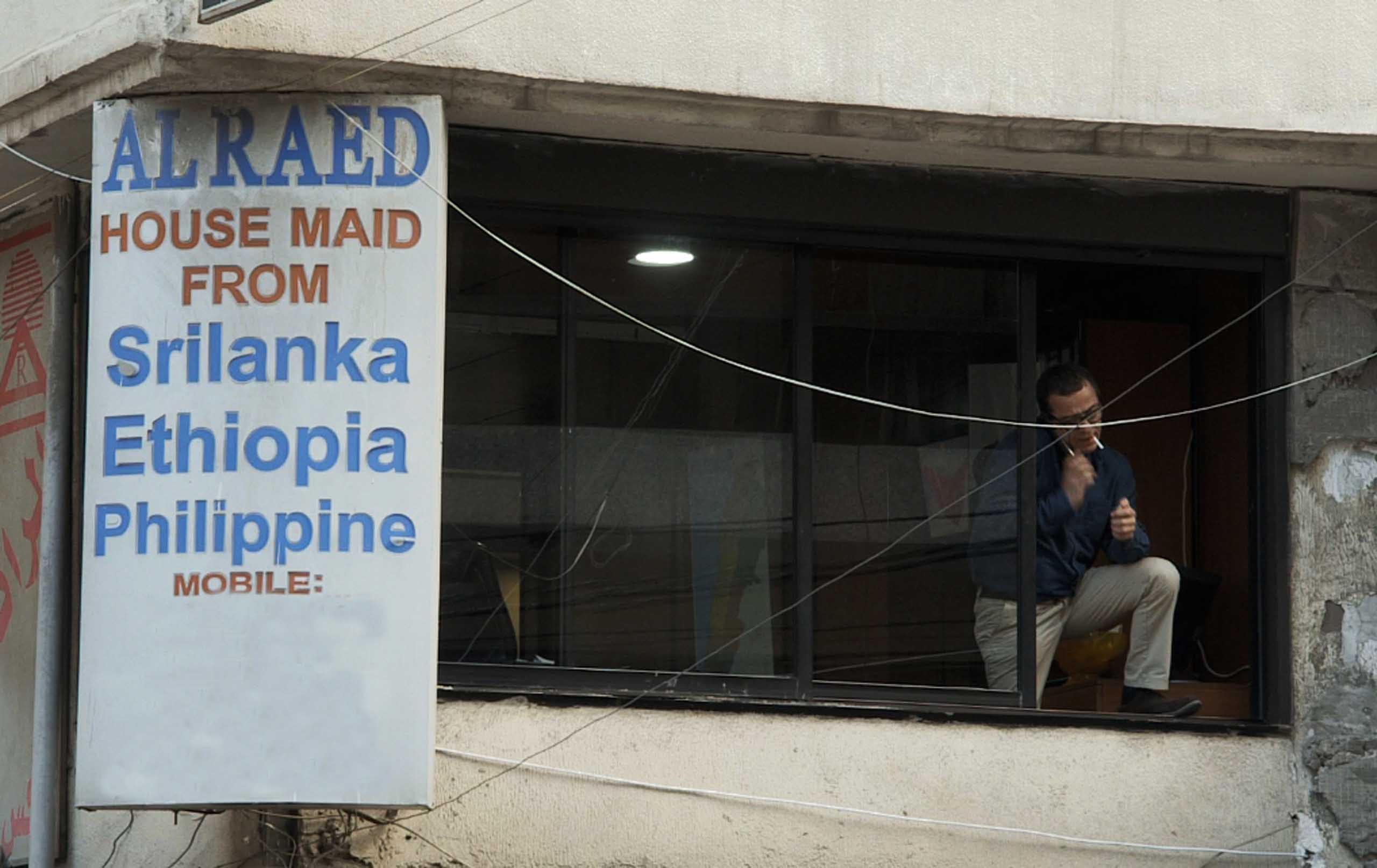
Zein in his office
Zain also expanded his work to include women from India, after a chance encounter with an Indian man in Beirut. Together, they decided they could work to promote the idea of Indian domestic workers coming to Lebanon. The Indian man went back to his native land and got his hands on a number of passports from his fellow countrywomen, charging each of them a certain amount of money in order to facilitate their travel to Lebanon. When Zain visited India himself, his colleague over there handed him copies of hundreds of passports belonging to Indian women. However, the women who arrived at the airport in Beirut—and whom Zain went to pick up—were not all the same women whose passport copies Zain had brought back with him from India. And so, there were quite a number of women who ended up working in homes in Beirut under false identities, under passports belonging to different women. Zain pocketed 200-300 dollars more for each Indian woman he managed to employ, in comparison to the amount he usually made from employing Sri Lankans. Indians, in his estimation, had stronger personalities and were more assertive both in general and in their work. Based on this, some of his clients indicated a preference for an Indian woman, especially that the Lebanese always wished to remain fashionable and exceptional in every choice they made. The Indian authorities, however, quickly put a stop to the whole business, intervening to forbid Indian women from traveling abroad to find domestic work.


All right then, we’ll move on to Ethiopia, Bangladesh, and the Philippines thought Zain. But the minute he began looking into the Lebanese-Ethiopian-Bangladeshi-Philippine brokerage market and agencies, he realized there was a monopolistic turf war going on between the powerful and the influential. As such, it was a market difficult to penetrate. Not only that: the brokerage network and its turf war went all the way up into the official governmental circles and institutions actively responsible for administering the transactions related to foreign domestic work in Lebanon, the Philippines, and Ethiopia. The Foreign Minister of Ethiopia, for example, was the second most powerful person in the government. He had a whole network of brokers who loyally answered to him, who were themselves part of a network of agencies dedicated to recruiting women for domestic work abroad, and he pocketed 100 dollars in return for every travel authorization signature he gave out. In Bangladesh, there were 3 or 4 people authorized to sign for travel facilitation, and each of them, as well, charged 100 dollars for every case they approved.
However, by the late 1990s, it became clear that it was maids from the Philippines who best fulfilled the needs, desires, and expectations of the new, educated Lebanese middle class, who were largely white-collar workers and members of the liberal professions. Filipino women who sought domestic work abroad were often young and well-educated, and many had university degrees. They generally had a relative mastery of the English language, which had become much more prevalent than French among wide swathes of these new privileged circles in Lebanese society. In addition, Filipino women were “independent and urbanized,” a personality type that suited the needs of this new class of employers. These were middle-class couples and often young. They wanted their domestic workers to be more like housekeepers, take care of their children, and speak English to them, alongside performing the other household duties of a domestic worker.
The Philippines: a Chance to Get Rich
A number of brokerage agencies had already seized the opportunity to penetrate into the Philippines, evolving their businesses and increasing their earnings before Zain’s own chance to do so finally arrived in 2001. In Beirut, he met a man whose nephew worked in the Philippines, running a recruitment office in Manila to bring Filipino women to work as domestic servants in Lebanon. Zain called the nephew on the phone, and they agreed he would come to visit the Philippines. By this point, Zain had already taken some private English lessons and could now speak the language, as well as some Sri Lankans who spoke Arabic, which means he spoke in a way that either elicited outright giggles or the suppression of mocking laughter. During his tour of the recruitment agencies for domestic workers in Manila, Zain met Ms. Mary, a joyous, elegant, and liberal Filipino woman, who invited him to visit her at her office, which happened to be one of the biggest brokerage agencies in the country, recruiting Filipino women for employment as domestic workers in various parts of the world. It was an office so big that it occupied two entire huge buildings. Ms. Mary took Zain on a tour so he could see how they did their work. One of the buildings was a residential one set up to house hundreds of women, who were packed into their tiny rooms like chickens in cages. When the women saw Zain walking through the halls with Ms. Mary, they yelled out: Good morning sir, good morning! Zain was embarrassed by the women yelling out at him and by the sight of them living confined to such subhuman conditions.

Still from the documentary film A Maid For Each, in which Zain draws a map illustrating the recruitment network involved in bringing foreign domestic workers into the country
Still from the documentary film A Maid For Each, in which Zain draws a map illustrating the recruitment network involved in bringing foreign domestic workers into the country. Map of the recruitment network for bringing foreign domestic workers into Lebanon, its logistics, and costs.
The second building was for training the women and preparing them for travel. Ms. Mary took him into a spacious room in the training building, which was her own private office, so that Zain could observe her last meeting with a group of women who had completed all the necessary arrangements and were about to go to the airport to travel abroad. Ms. Mary stood before the women, addressing them in English. Zain couldn’t understand everything she said, but from what he could make out of Ms. Mary’s final pep talk to her girls, she was saying: you are ambassadors of the Philippines, and it is your job to raise the name of your country high in the world.
Ms. Mary began sending hundreds of application folders to Zain’s agency in Mouawad street. Each one contained all the necessary information—including a photo and a photocopy of her passport— required for a single woman to obtain pre-authorization from the Lebanese Ministry of Labor for travel to and employment in Lebanon. Once everything was approved and sent to Ms. Mary’s office in Manila, it would only be a few days before the woman received her visa. She was then pulled out of the building where she had been packed in like a sardine, given a pep talk to raise the name of Philippines high in Lebanon, and sent off to a new country to begin a new life.
In those days, Zain would present his clients with a photo album containing photographs of the women available for recruitment and ask them to choose a domestic worker that way. And if he managed to sell his clients on ten Filipina women in a single day, then all ten would be arriving at Beirut airport just a few days later without delay. This was not the case with the Sri Lankan, Ethiopian, and Bangladeshi women. If you had completed transactions for ten women from any one of those countries, then only 3 or 4 might arrive at the airport, either because the rest had become reluctant to travel and work in Lebanon, or because the Lebanese brokers there were so disorganized and chaotic in their work that they botched some final part of the process. Work with Ms. Mary’s office, however, was precise and methodical. That, along with the slight increase in income made from recruiting Filipino women and in the monthly salaries they demanded from employers (which was negligible and still far below the actual value of their work), as well as the popularity of Filipino women among a wide section of the Lebanese population, encouraged Zain to concentrate most of his efforts on trying to bring in as many numbers of women from the Philippines as he could. His clients were so enthusiastic, and he had so many files to process that he had to sometimes pass extras on to other brokerage agencies in Beirut so they could handle the large influx.
When he got to this part of his story, Zain once again went back to the beginning. He reminisced about shuttling paperwork and files back and forth between the auto body shop and the house and office of his relative, the Minister of Labor:
“We were illiterate, poor and ignorant,” he said, “and we knew absolutely nothing about servants or domestic work or brokerage agencies or what permits they required. Now, when I look back on what I’ve learned over the last 20 years of my work here, I realize that people like me, we were never actually living in this country we’re living in. We were completely cut off from everything. Everything I’ve encountered and learned about through my work, I was ignorant of before. I fell into this work by chance, and I changed completely. I got to learn and experience how these wealthier people live, these people I was completely separate from before. They didn't know me, and I didn’t know them. I had no idea how they behaved or worked or how they established relationships among one another. As a result, my mind expanded, my world expanded. I came into contact with so many different types of people from all the different classes: the wealthy, the politicians, the ministers, bank managers, CEOs, ambassadors, the middle classes, the poor. When I began working at this job seriously, and in earnest, I would often catch myself suddenly thinking, is this really me, working here and making all this money? Is that even possible? Is that truly me? Before I worked so hard and for such long hours, and I could barely make ends meet. I stayed poor, living on the bare minimum. I would change 50 car tires a day, repairing and reattaching them, but I barely made anything from that work. You’ve changed a lot, Zain, I’d tell myself. Look at you, buying a new car, exchanging it out whenever you want for something even newer. Look at you, traveling here and there. Yes, you’ve changed, Zain, you’ve really changed.”
Ms. Mary then launched a website, where she shared photos of prospective domestic workers who were ready to travel and work outside the Philippines. Each woman had a number attached to her name, so that potential clients browsing the site could look up further information about each woman and then call up Zain’s office, give him the number of the woman they’d chosen and recruit a new domestic worker without ever having had to set foot outside their homes. Zain would then email Ms. Mary’s office and ask them to get all the paperwork ready to arrange travel for the chosen woman. A few days later, she would arrive promptly at Beirut airport. And that’s how Zain’s office came to be receiving no less than ten demands a day from customers looking to employ a Filipino domestic worker. After having paid all the costs related to bringing them to Lebanon, he made 250 dollars of pure profit per woman he recruited, which meant he was making about 40 to 50 thousand dollars of profit per month. In the first two or three years of the new millennium, Zain had managed to amass considerable wealth, completely overhauling every aspect of his life, both materially and otherwise.
Travels and the Villa of Your Dreams
Between 2000 and 2006, Zain’s work was comfortable and easy, and his business was booming in the office on Mouawad Street. In those days, he divided his time between travels to the Philippines and trips back to his native village of Shaqra in the south, where he was overseeing the construction of his new villa. This period of prosperity coincided not only with the popularity of Filipino domestic workers on the Lebanese market but also with a construction boom in a number of towns and villages in south Lebanon, especially those that had been in the zone along the border occupied by Israel, and from which the Israeli armed forces withdrew on May 25, 2000. The people in the south observed the date as Liberation Day, mounting celebrations to mark the withdrawal of troops and the end of an occupation that had been ongoing since the summer of 1982.
Before some of Zain’s trips to Manila, Ms. Mary would pave the way for him by organizing ad campaigns that included print ads, local radio spots, and TV billboards, all announcing the arrival of a Lebanese businessman who was looking to recruit Filipino women for jobs in Lebanon, Saudi Arabia, and Kuwait. Zain would land at Manila airport at 5 in the morning and immediately be whisked off to the VIP area thanks to Ms. Mary’s connections and influence. On his way from the airport to her office, his car would be accompanied by another, from which issued loudspeaker announcements declaring the arrival of the promised Lebanese businessman, and Zain would see numbers of passersby all stopping to watch his car drive past. Meanwhile, he sat there sweating with embarrassment in the backseat of the car, stuck in Manila’s morning traffic as people stared. When he arrived at Ms. Mary’s office, he’d find they had prepared a whole room just for his use and assigned him his own secretary as well so he could arrange for interviews with women who were seeking work abroad. His meetings would begin that same afternoon, as woman after a woman walked in and sat down before him. Each woman would tell him a little bit about herself, her work experience, her talents, and best qualities, trying to make herself appear like an excellent candidate for the Lebanese businessman so that he might choose her. In the meantime, Zain was trying to hide his own discomfort and embarrassment at the strange position he’d found himself in.
From his repeated visits, Zain came to see that the Philippines was a country whose institutions and businesses functioned in an organized way and whose people were intelligent, educated, and hard-working. Though the country was modern and orderly, job opportunities were scarce, especially for women. He learned that there were about 12 million Filipinos, most of them women, working outside their own country, scattered between Europe, the US and the countries of the Arab Gulf. He learned that there were some 500 nurses who had left all at once in the course of a single week to go work at hospitals in the US for a salary of about 500 to 600 dollars a month. And he also learned that Ms. Mary, the woman with whom he did business, was a woman of great influence and connections not only with the government in her country, but within the embassy as well, where she had people on the inside acting as brokers and receiving bribes and commissions to facilitate the paperwork for the foreign recruitment of domestic workers, bypassing official channels and the law in the process. The Embassy of the Philippines in Beirut, for example, along with the Filipino Ministry of Labor, had determined a minimum salary of 200 dollars per month for Filipino women coming to work as domestic laborers in Lebanon. But the brokerage agencies in Manila and in Lebanon had colluded together to reduce that number down to 150 dollars, and it was the job of the Lebanese agencies to use all the bribes and crooked methods at their disposal to get the embassy consul in Beirut to turn a blind eye to their non-compliance in wages should he ever realize the discrepancy as a result of a complaint from this woman or that. The people who ran the offices in Lebanon would often threaten the women and warn them not to reveal their actual monthly salary to embassy staff in Beirut if they ever found themselves needing to seek refuge there from problems with their employers.
Things continued like this, with the business of Filipino domestic workers booming in Lebanon right up until the 2006 war. That was when authorities in the Philippines issued a decision banning their nationals from traveling to work in Lebanon. The arrival of new women via the usual channels slowed to a trickle before stopping altogether. This prompted agencies in Lebanon, the Philippines, and the Arab Gulf region to begin coordinating together in order to be able to smuggle Filipino women into Lebanon for work by way of the Gulf countries.
Thus began a new, tripartite black-market network, a lengthy and complex process that would begin in the Philippines, when agencies there would carry out the paperwork necessary for a woman to pursue domestic work in one of the Gulf countries. Meanwhile, agencies in the Gulf would be preparing the paperwork to send the woman to Lebanon in cooperation with an agency there. But this tangled process and its complicated network not only disrupted the smooth influx of Filipino women into the Lebanese domestic labor market, slowing it down considerably, but also raised all the costs involved: of the transactions that had to be done, of travel, as well as women’s salaries in Lebanon. So, despite the still-high demand for Filipino domestic workers, their numbers dwindled in the country. The work taking place between employment agencies in Lebanon and recruitment agencies in the Philippines was reduced considerably as well. In order to make up for the loss represented by the lack of Filipinos, Zain instead turned to recruit Malagasy women, who were said to be kind, educated, and respectable. The problem was that they spoke French instead of English. This forced Zain and others like him to have to reevaluate their work, to try and understand how to target new and more specific client groups and classes. The clients who had grown used to Filipino domestic workers and familiar with the English language they spoke were compelled to reassess everything now with this change of nationality and language in their domestic workers. Some of them were forced to revive the old, archaic “Francophone” customs of days they’d thought long gone, replaced entirely by the “Anglophone” ways of the modern world.
A Mafia in a Cave
Zain compared getting into the business of recruiting foreign domestic workers to entering into a labyrinthine cave system. First, there’s the large, initial cavern of the Lebanese government and its official administration over the brokerage agencies that do this sort of work. But this cavern leads to a series of other, ever-smaller and tighter spaces that have to be negotiated by agencies such as his: the relationships with the recruitment agencies and brokers in the countries abroad and the paperwork and transactions that have to be managed with the embassies of those countries in Lebanon.
Then, there is the relationship with the women themselves, who all come from different countries, have different habits, different traditions, different religions, different attitudes. And there are the Lebanese customers, with their own complicated desires and strange whims.
Zain sees the brokerage agencies as playing the role of mediator between the country supplying the “human good” to be exported and the country receiving said import. The agencies take care of marketing the “human good” in their country while also managing the relationships between the authorities of the exporting countries, the administrative institutions of the importing country (the Lebanese Ministry of Labor and the Directorate of General Security), and the customers whose demands set the whole enterprise in motion (the Lebanese, their whims, their attitudes). Often this mediation extends to dealing with the internal security forces, the prosecutor general and the judicial system in Lebanon (in the event that the women are attacked or subjected to abuse or violence in the homes in which they work, or if they should run away). In navigating this tricky labyrinth, the agencies must always play a conciliatory role, trying to create a workable compromise between all these sides for the protection of their own interests, to enable themselves to continue their own work and to continue accumulating financial profit.
In the gloom of this labyrinth, this system of brokerage, of collusion, and enmeshed private interests operates very much the way a mafia does, but it is so widespread and common that the most nefarious parts of its operations become simply taken for granted. In this world, the agency plays the role of intermediary. So if an issue should arise between a domestic worker and her employer, it is the agency’s job to fix it. If the employer calls the police, for example, to make a complaint about their worker, the police will ask the employer to call the agency. And if this issue should somehow arrive all the way to the prosecutor general, he, too, will also ask that the worker be sent to the agency that brought her here. Based on decisions issued by the judiciary, Zain has more than once had women released into his custody after they were arrested by the police or turned over by their employers to the police station. It has also happened that his agency has received calls from hospital administrators after a domestic worker was taken to the emergency room, asking them to pay for the cost of her treatment.
Once, one woman was sexually assaulted in a cab at night, and seeing an army checkpoint, opened up the door and flung herself from the vehicle, screaming at the top of her lungs and running for safety. She was taken by the soldiers, along with the driver of the car, to the police station, who then called the agency to come handle it. That specific time, when Zain arrived at the police station, he found the driver’s immediate and extended family all waiting for him there, as well as the forensic doctor who had examined the woman. He was given 500 dollars in exchange for his “trouble,” while the police were given 400 dollars by the driver’s family as a bribe, and the woman was asked to pay 500 dollars in order to secure travel for her back to her home country. After she paid the money, Zain handed her over to the agency so they could take care of the rest. When a domestic worker is sexually assaulted, or another commits suicide at the home of her employer, then the employers call the agency so they can follow up on these incidents, saying: please fix this. We have a family and children.
When fighting between a man and wife brings them to the brink of divorce, and they cannot agree over who will receive custody over their domestic worker, one of them will call the agency to say that the woman was registered in his name and therefore she belongs, by law, to him.
The latest trend, these days, among some women with domestic workers, is setting up cameras throughout their homes so they can keep an eye on their maid at all times. The “madam” can then see exactly what her servant is doing everywhere, whether in the bedrooms or kitchen or bathroom. More than once, a housewife has called Zain’s agency to complain about what she saw her domestic worker doing in the bathroom of her home!
Part Three
How to be Served?
Research
Nizar Saghieh, Lawyer
To illustrate the thousand ills of the Kafala System, we, along with the lawyer Nizar Saghiyeh, came up with a character we named Layla. Layla is in her thirties, born and raised in Beirut. For years, Layla refused to have a domestic worker, but after she had her second child, she decided to hire someone to “help out” at home.
Audio by Nizar Saghieh (in Arabic)
2. Working Conditions
Q: So, there’s a contract that should be signed in the presence of a notary. Is there anything else I should know?
A: This is a standardized contract, which means you both need to sign it as is. You are, of course, free to give her more rights, such as higher wages, and can add these stipulations into the contract. But the notary will advise against it in order to spare you the higher fees required for making changes.
Q: What about holidays and days off?
A: She gets one day off a week. That means one day in which she gets to rest from work. But there’s nothing in the work contract to say that she has the right to leave the house on her days off. The contract also mentions six holidays a year. She doesn’t even know about any of this because the contract is written in Arabic. When the standard contract was first drawn up, it was supposed to be available in more than one language, but the way it’s done now saves employers extra costs.
Q: What about wages?
A: Wages are dependent on nationality and are to be paid at the end of each month.
Q: The type of work required?
A: Domestic work. Nothing more is specified in the contract.
Q: The working hours?
A: Ten non-consecutive hours of work a day with eight consecutive hours of sleep.
Q: Can I lock her into the house when I leave?
A: In principle, you can’t lock another person up; it’s considered an infringement on their personal liberty. But it’s become the norm in Lebanon. People are afraid their domestic workers will run away.
Q: Can I bring her with me on visits to other people’s houses or ask her to do work in someone else’s house?
A: Of course, there are no legal objections to bringing her along on visits. But it’s forbidden to put her to work in someone else’s home. That’s what it says in the contract. In terms of beach resorts and swimming pools, there’s been some talk of beach resorts that won’t allow domestic workers entrance. The issue is that they won’t allow her to enter to swim. She’s allowed to accompany the family in order to take care of the kids while they swim, but not to swim herself. In any case, this is an issue that’s in the Ministry of Tourism’s hands.
Q: Can she reside outside my home?
A: It depends on the contract. You have to provide her with adequate housing as well as food and clothing. The General Security insists that this should be done inside your home, but this isn’t anywhere in writing.
Q: Is her medical care my financial responsibility?
A: As per the contract, you need to provide her with medical treatment. The insurance will cover emergency cases and hospitalization up to a certain limit. Insurance won’t cover vision and dental, and so these are your responsibility. In any case, there was some talk yet again recently that the Ministry of Labor was going to amend the contract so that it would be more in line with the conditions laid out in the International Labor Organization’s Convention on Domestic Workers, which Lebanon signed but did not ratify.
3. Disputes
Q: What if there’s a dispute between me and her?
A: If this happens during the 3-month probationary period, you can ask to have her replaced with another domestic worker. According to the contract, it is possible for either of you to submit a complaint to the Ministry of Labor, which will try to find an amicable solution to the problem. It is possible for either of you also to seek recourse with the law. The conditions for annulling the contract are the following: if she undertakes an act that harms you or a criminal act that is punishable by law. In this case, she shoulders the cost for her own airline ticket back to her country. Conversely, she can move to annul the contract if you fail to pay her for three consecutive months, or if she can prove that she’s been subjected to physical or psychological abuse, or if she’s being exploited and made to work another job. In these cases, you pay for her ticket back home. In most cases, people turn to the recruitment office for a quick solution even though legally, again, the office has no authority in this area. The other solution is to cede responsibility of her over to another employer.
After surveying a vast number of judicial rulings, it is apparent that the fate of the domestic worker is, in the vast majority of cases, decided by the security forces in coordination with the public prosecutors, who are content to simply uphold the work of the security forces without the judiciary having any active role, regardless of what might be actually just or fair. This became clear in several cases where domestic workers had left their place of employment and overstayed their residency periods. In these cases, after the women had already been arrested and interrogated by the Internal or General Security Forces, the public prosecutor’s office then okayed the arrest and turned the women over to the General Directorate of General Security so that they might decide on whether or not to issue deportation orders, provided that their files be turned over to the judiciary after that. Meaning that it’s the General Security that both decides whether to deport them or not and carries that decision out. Only then are their files referred to the judiciary. And then, the public prosecution sets in motion the strangest thing imaginable: the trial in absentia, that is, the domestic worker is tried without being present, in such a way that also absents her pain from the courtroom and all her suffering in all its forms.
Worse still is the persistence of this custom to mount an accusation of theft against domestic workers as soon as they leave their work, to ensure that the security forces move to arrest them. And it must be noted that, despite the proven defamatory nature of many of these cases, the practice continues within a broad field of tacit compliance from the security and the judiciary. The most dangerous thing about this practice is that in many cases, the threat of criminal proceedings became a way to coerce women to return to work under the pressure of possible arrest and deportation. This is aside from the fact that, unfortunately, the majority of judicial rulings until this day consist of a single page of prejudicial ideas bordering on outright racism and teeming with the word “escape” (we counted over 77 verdicts that used this word): a word that connotes slavery. This in addition to many other examples of prejudice, such as referring to the women by nationality rather than name (for example, the Ethiopian or the Sri Lankan) and other such indications. Also significant is the absence of translators in many cases. Additionally, we note the limited nature of legal aid that is provided to the women, that is, the provision of lawyers to advocate for the workers’ rights or help defend them. This, in turn, leaves them vulnerable to yet more prejudice and abuse. It became in the woman’s best interest to accept the aforementioned return to her employer in order to avoid a worse fate—either deportation back to her home country along with all the disappointment and wasted investment that entails, or exposing herself to the risk of arrest and deportation at any time. Hence, faced with this reality, she often finds herself in a bind, caught within these constraints.
We also came across other cases where employers accused their domestic workers of theft after she had left their employ. In these cases, the worker was arrested based on very flimsy evidence and then turned over to the judiciary charged with theft. In these instances, the General Security deported the women during the period of their trials without informing the judiciary. It is quite striking that in several similar court cases, the court in fact issued a verdict acquitting the woman of her crime, without that verdict of innocence affecting her fate in any way, given that she had already been detained for months and then deported—without ever receiving any compensation—as per a decision issued by the General Security. Moreover, it is most likely that the woman in question will never even know that she was officially acquitted of her crime. This same pattern is apparent in cases where the worker herself was the plaintiff. There are judicial cases upon cases piled up before the labor arbitration council, brought by numbers of workers demanding their wages or compensation due to abuse. However, it is noticeable that in every one of these cases, the worker had already been deported after her residency permit became invalid following her leaving her sponsor’s employ, while her case has remained open for years.

Part Four
Humans as Marketplace Goods
Interview with
Rahil Zaiji
The lack of employment options in Ethiopia drove Rahel to consider leaving her home in search of work. She decided to come to Lebanon after a colleague convinced her that this was the country where she’d be able to realize her dreams. The country whose government’s role, as Michel Shiha once said, consisted of “ensuring food and appropriate clothing” for its workers, while merchants were left to “ensure their wages.”
The Lebanese step on our necks while someone else
steps on the necks of the Lebanese.
This is the system.
I call it a market. It’s a labor market. Set up by human traffickers, who sell humans the way others sell sheep. When you’re trading in sheep, there’s someone who raises the sheep and then sells them to make a profit off the work they put in. But the owners of these agencies don’t even give you a drink of water. They don’t feed you the way your parents do. Worst of all, the owners of these agencies traffic in human beings without ever having had to put any effort into caring for them. If you’re selling sheep, you have to put some effort into raising them. Without that effort, that work, you’d get nothing. And so how can it be that when it comes to human beings, who are creatures worthy of respect… how can it be that people they’ve made no effort to raise or care for or to provide with food and drink… how can they then turn around and put all this effort into trading them in the marketplace?
